E-PORTFOLIO

Architectural Design IV
REFLECTION
Thinking & problem solving skills - Solve and minimize the issues, and think to enhance it to be better for every projects.
Intrapersonal skills - Better time management and ensure sufficient of rest everyday. Release stress by watching movies and listening to music.
Lifelong learning - Study and research the assignment and seek for advise from lecturer. Communication is vital especially in group projects.
P1A


SITE ANALYSIS & DESIGN RESPONSE - DESIGN FOR COMMUNITY
Site Analysis & Design Response establishes an understanding of the context for Project 1B and 1C. In assigned tutorial groups, students will conduct site visits where they record, observe, and gather data informing the physical and social dimensions of the context. Method used in data collection may include sketches, diagrams, photography, videography, audio recordings, secondary site data from various local authorities, and simple interviews focusing on but not limited to these said dimensions, as listed. Students will identify the intangible qualities together with the physical inventory that shape the character of the site; Engagement with site users will establish the needs of the community at the site. As the Design Response of the Site Analysis stage, students will develop design responses to initiate their Project 1B and 1C.
P1B
SMALL COMMUNITY STRUCTURE
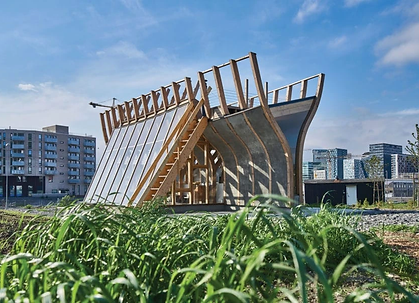
Project 1B focuses on designing a small community structure that explores materiality and environmental poetics in relation to its context. Within the assigned tutorial groups, students will form two teams (5-6 students each) to design two small community structures. These structures aim to serve the community and foster engagement. Students are required to design a structure within an approximate space of 3m x 3m x 6m, or 50sqm, based on site analysis and design responses derived from Project 1A. Each tutorial group (10-12 students) must be divided into two teams, with each team completing a design. The design should address community needs at Taman Wawasan Recreational Park in Puchong, with a clear representation of human activities and interactions within the structure.

P1C
MyReka-reasi CLUSTER
The project aims to design and create architectural spaces to foster a sense of community among the users. In line with the learning outcomes of the module, students shall explore within the framework of:
• the Environment, both natural and man-made.
• the Community of End-Users and their experiences and how to foster the sense of community through design.
• the Materiality, its environmental poetics, and its integration into design; and finally
• the use of Spatial Typology as a strategy in design.
Students shall identify several main aspects of the said structure in terms of its purpose and dimension. Several key questions to be addressed such as:
• What constitutes the sense of community, and how to ensure fit?
• Are there issues in relation to the social activities of this community and user group, particularly for individuals aged 60 and above?
• How does the materiality respond to the physical and social context, either tangible or otherwise?
• How can environmental sustainability be incorporated into design?
• In what manner are the multitude of forms and spaces organised?